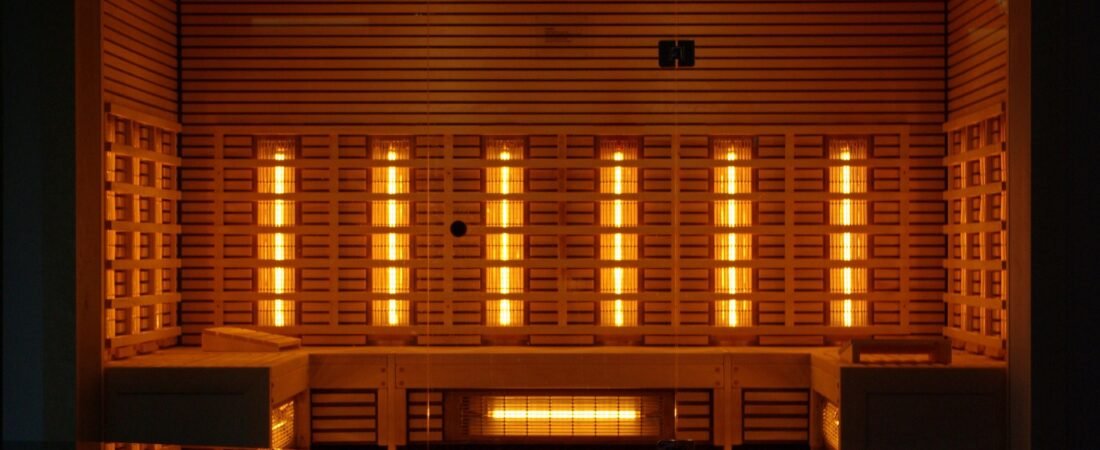
If you are shopping for a home sauna, one of the first decisions you’ll face is whether you want a traditional sauna or an infrared sauna. On a product page, they can look similar: a wood cabin, a bench, a door, and wall controls. The experience inside them, however, is quite different.
A traditional sauna heats the room itself, usually with an electric heater and a basket of hot stones. An infrared sauna uses heated panels that warm your body more directly while the surrounding air stays cooler. Neither choice is automatically better. The better choice depends on how hot you want the room, how much electrical work you are willing to do, how much space you have, and what you expect a sauna session to feel like.
The biggest difference is the heat
Traditional saunas are the hotter of the two. A typical electric home sauna is designed to reach at least about 170°F, and many people use them in the 170°F-to-190°F range. You sit in very hot air, and if the heater has sauna stones, you can pour a small amount of water over them to produce a burst of steam and humidity.
Infrared saunas usually operate at noticeably lower air temperatures. Depending on the model, many run around 110°F to 140°F. The panels radiate heat toward the body rather than relying entirely on heating the air first, so the room can feel warm and intense without reaching traditional sauna temperatures.
That difference is not merely technical. Some people love walking into a very hot traditional sauna and immediately feeling the heat in the air. Others find that uncomfortable and prefer the gentler environment of infrared. If you already know which experience you enjoy, that may matter more than almost anything else on the specifications sheet.
Traditional gives you stones, steam, and the classic sauna experience
If the picture in your mind is a Finnish-style sauna with a heater full of stones, very hot air, and the ability to splash water onto the stones, you are describing a traditional sauna.
That ability to add water is important to many sauna users. The burst of steam – known as löyly in Finnish sauna culture – briefly changes how the heat feels, even though the room temperature itself may not move very much. Infrared panels do not provide that same experience.
If you’ve used traditional saunas at gyms, hotels, spas, or health clubs and want to recreate that feeling at home, buying infrared simply because it is easier to install may be disappointing.
Infrared is usually easier to install
This is where infrared often has a practical advantage. Many compact one- and two-person infrared saunas use 120-volt household power. Some can plug into an appropriate existing outlet, although the manufacturer may still require a dedicated 15- or 20-amp circuit.
Traditional electric saunas are much more likely to require 240-volt service. A common 6 kW heater, for example, may require a dedicated 240-volt, 30-amp circuit and a hardwired connection. If that circuit does not already exist near the sauna location, a reasonable planning allowance for straightforward electrical work is roughly $300 to $800. A difficult wire run or electrical-panel problem can push the cost higher.
That means the electrical difference can materially change the all-in price. A $3,500 infrared sauna that plugs into an existing circuit may remain fairly close to a $3,500 project. A $3,500 traditional sauna might become a $4,000-to-$4,500 project once you include wiring and other installation work.
Infrared cabins are often smaller
Because infrared panels don’t need the same heater-and-stone setup, infrared cabins can be very compact. A two-person infrared sauna may occupy roughly a 4-by-4-foot footprint or less, while a comfortable two-person traditional sauna is often larger to allow room for the heater, safety clearances, and bench space.
That can make infrared especially attractive in a bedroom, home gym, finished basement, or other room where every foot matters. Traditional saunas can still work beautifully in small spaces, but you generally have less flexibility.
How quickly do they heat up?
Infrared saunas often feel ready quickly because the panels start radiating heat soon after you turn them on. Traditional saunas have to heat the air, the wood interior, and the stones. Depending on the heater, room size, and starting temperature, a traditional sauna may take about 30 to 60 minutes to reach your target temperature.
That is not necessarily a disadvantage. Many traditional sauna owners simply turn the heater on before they plan to use it. Some newer controls even allow delayed starts or app-based operation. But if your goal is to decide at 8:15 that you want a sauna at 8:20, infrared generally has the convenience advantage.
What about operating cost?
Both types are relatively inexpensive to run compared with many whole-house appliances, but traditional heaters usually draw more power while operating. A traditional two-person room might use a 4.5- to 6-kW heater, while a compact infrared sauna might use roughly 1.5- to 2-kW.
The actual dollar difference depends on your local electric rate and how often you use the sauna. For someone taking a few sessions each week, electricity is unlikely to be the deciding cost compared with the purchase price and installation. Still, infrared normally uses less electricity per session.
Do not choose based on health claims alone
Sauna sellers make plenty of claims about detoxification, circulation, calorie burn, recovery, and other health effects. Some benefits of heat exposure are supported by research, but marketing claims can move well beyond what the evidence actually proves.
For a purchase that may cost several thousand dollars, we would choose the sauna first on the experience you want, the installation your home can support, build quality, warranty, and manufacturer support. Treat sweeping medical claims as something to verify separately rather than as the reason to buy one type over the other.
Which one costs more?
The market overlaps enough that neither category is always cheaper. Entry-level infrared cabins can be found well below the price of many traditional saunas, while premium infrared models can cost $5,000 or considerably more. Good traditional indoor kits also span several thousand dollars and can climb sharply with larger cabins, upgraded heaters, glass, controls, and professional installation.
The more useful comparison is total installed cost. Infrared often wins there because of simpler electrical requirements. A traditional sauna may cost more to get running, but if you specifically want high heat, stones, and steam, paying another few hundred dollars for wiring may be money well spent.
Who should probably choose infrared?
Infrared is worth a serious look if you want a lower-temperature experience, have limited space, want a simpler installation, or strongly prefer to avoid adding a 240-volt circuit. It can also make sense for someone who expects to use the sauna spontaneously and values a faster warm-up.
Who should probably choose traditional?
Traditional is the better starting point if you want the classic sauna experience: very hot air, heated stones, multiple bench heights, and the ability to add water for steam. It is also the better choice if you have used traditional saunas before and already know that is the experience you enjoy.
The practical tradeoffs become clearer when you also compare operating costs, electrical requirements, and what is realistic in a home-sauna budget under $5,000.
The bottom line
Infrared and traditional saunas solve the same basic problem in different ways. Infrared generally offers easier installation, lower air temperature, a smaller footprint, and lower electrical demand. Traditional saunas give you hotter air, sauna stones, steam, and the experience most people associate with a classic Finnish-style sauna.
If you are undecided, do not start with the price tag. Start by asking what you want to feel when you open the sauna door. Once you know that, the electrical requirements, room size, and budget become much easier to sort out.
Sources checked for current specifications: Harvia, Almost Heaven Saunas, and Saunafin manufacturer materials. Prices and electrical requirements vary by model and location.