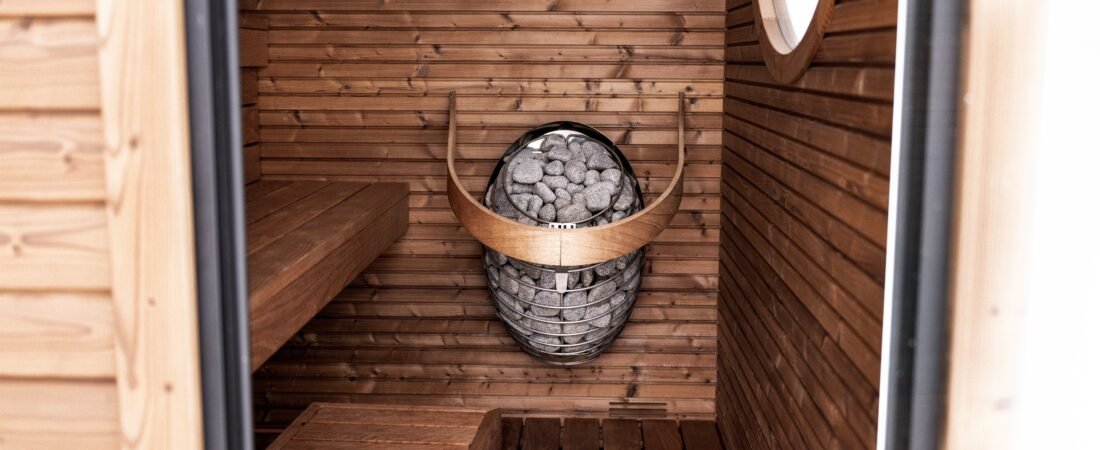
A $5,000 budget puts you in an interesting part of the home-sauna market. It is enough to move well beyond the cheapest portable tents and entry-level cabins, but it is still low enough that you have to make choices. You may be able to buy a very good sauna for under $5,000, but you probably will not get every premium feature, the largest cabin, and professional installation all within the same budget.
The first question is whether your $5,000 budget covers the sauna itself or the entire installed project. That distinction can easily change what you should buy.
Start with the real budget, not just the sticker price
If you are buying a 120-volt infrared sauna that plugs into a suitable existing circuit, the advertised price may be fairly close to the final cost. A sauna priced at $2,500 might actually remain a $2,500-to-$3,000 project once delivery and a few accessories are included.
A traditional 240-volt sauna is different. If you need an electrician to add a dedicated circuit, a reasonable planning allowance is roughly $300 to $800 for a straightforward installation. If your electrical panel is already full or undersized, a panel upgrade can add anywhere from $2,000 to $5,000 or more. Professional sauna assembly can also add another four-figure expense on some models.
So a homeowner with a firm $5,000 all-in budget should probably shop differently than someone comfortable spending $5,000 on the sauna and another $1,000 or $2,000 to get it installed.
What does $5,000 buy in 2026?
Quite a bit, depending on the type of sauna you want. Current pricing shows strong options across several categories.
At the upper edge of the budget, Almost Heaven currently lists its two-person Spectacle traditional indoor sauna around $4,600. It uses a 6 kW, 240-volt heater and requires a 30-amp hardwired circuit. That is a legitimate traditional sauna with stones and temperatures in the range most people associate with a classic sauna experience, but you’ll need to add the electrical work to the budget.
On the infrared side, premium one-person models can also sit near the $5,000 mark. Sun Home Saunas currently lists its entry Solstice 1 around $4,900 to $5,000. At the other end of the range, established sellers offer two-person infrared cabins in roughly the $2,000-to-$3,000 territory. That leaves considerably more room in the budget for delivery, electrical work, flooring, or simply keeping money in your pocket.
Prices change frequently, especially with sauna promotions, so view these figures as examples of what the market looks like rather than permanent price tags.
Traditional sauna under $5,000: possible, but watch installation costs
If what you really want is the traditional experience – hotter air, sauna stones, and the ability to pour water over the stones – you do not have to spend $10,000. Legitimate indoor traditional cabins sell for less than $5,000.
The catch is that the heater is usually 240 volts. That means a traditional sauna that costs $4,500 may become a $5,000-to-$5,500 project once you add electrical work. If you also need professional assembly, the total can climb further.
For a homeowner trying to stay under $5,000 total, the best traditional value may therefore be a compact kit that you can assemble yourself, installed close to an electrical panel that can easily support the new circuit.
Infrared gives you more room to stay on budget
Infrared saunas generally make the $5,000 ceiling easier to live with. Many one- and two-person models use 120-volt power, and good models are available well below $5,000. That leaves room to choose better wood, better heaters, a stronger warranty, or a somewhat larger cabin without immediately spending the entire budget.
The tradeoff is the sauna experience itself. Infrared cabins usually run at lower air temperatures than traditional saunas and don’t provide the same stone-and-steam experience. If that matters to you, buying infrared simply because it is easier to install can lead to disappointment.
Do not spend the entire budget on features you may never use
The sauna market is increasingly full of extras: Bluetooth speakers, colored lighting, app controls, red-light panels, touchscreens, and elaborate control systems. Some people genuinely enjoy them. Others use the sauna for six months and discover that the only controls they really care about are temperature and time.
If the choice is between a better-built cabin with a reputable heater and warranty or a cheaper cabinet loaded with electronics, we would usually put the money into the cabin, heater, and manufacturer support first.
A useful way to divide a $5,000 budget
For a homeowner who has not yet chosen a model, these rough spending plans are more useful than assuming every dollar should go toward the sauna itself:
- 120V infrared: roughly $2,000-$4,000 for the sauna, with little electrical work if the existing circuit is suitable.
- Premium compact infrared: roughly $4,000-$5,000 for the sauna itself, with a relatively simple installation.
- Traditional 240V indoor sauna: roughly $3,500-$4,500 for the sauna, leaving perhaps $500-$1,000 for electrical work and small installation expenses.
- Traditional sauna near $5,000: realistic if the electrical service is already available, but likely to exceed $5,000 all-in if new wiring or professional assembly is needed.
What we would prioritize under $5,000
At this price point, we would place the most weight on a few things that matter long after the purchase is made:
- A reputable heater or heating system
- A cabin large enough to be comfortable rather than merely fitting the advertised number of people
- Clear electrical requirements before purchase
- A useful warranty and a manufacturer that sells replacement parts
- Wood and construction quality
- A design that actually fits the room where the sauna will live
We would put app controls, speakers, lighting effects, and other extras lower on the list unless you already know you want them.
Do you need to spend the full $5,000?
Not necessarily. One of the easiest shopping mistakes is turning a maximum budget into a target price. If a $2,700 sauna gives you the heat, space, electrical simplicity, and warranty you want, there is no prize for finding a $4,900 model instead.
The better question is: what does the extra money buy? If another $1,500 buys a larger bench, a better heater, stronger construction, or a much longer warranty, it may be worth it. If it mainly buys a touchscreen and colored lights, you may be happier keeping the money.
A realistic budget should include more than the cabinet price, so also review electrical installation costs, expected operating costs, and the choice between infrared and traditional heat.
The bottom line
A $5,000 budget is enough to buy a genuinely good home sauna. It can cover a well-equipped infrared sauna with money left over, or it can get you into a compact traditional sauna if you keep installation costs under control.
Before shopping by price alone, decide whether $5,000 is your purchase budget or your total project budget, and decide whether you really want traditional heat or infrared. Those two decisions will narrow the field more effectively than almost any list of “best” models.
Once you’ve answered those questions, the best value is usually the sauna that spends your money on what you notice every time you use it: heat, comfort, construction, and reliability.
Sources and price notes
Pricing examples were checked in August 2026 and may change. Current examples include Almost Heaven Saunas’ Spectacle 2 Person Indoor Sauna at approximately $4,600 with a 6 kW, 240V, 30-amp heater requirement, and Sun Home Saunas’ Solstice line near the $5,000 entry point. Always verify manufacturer pricing and specifications before purchase.